Tracing Regulatory Impacts on Roulette Payouts in Cross-Border Mobile Casinos
Devon Patterson · Aug 23, 2026

Tracing Regulatory Impacts on Roulette Payouts in Cross-Border Mobile Casinos
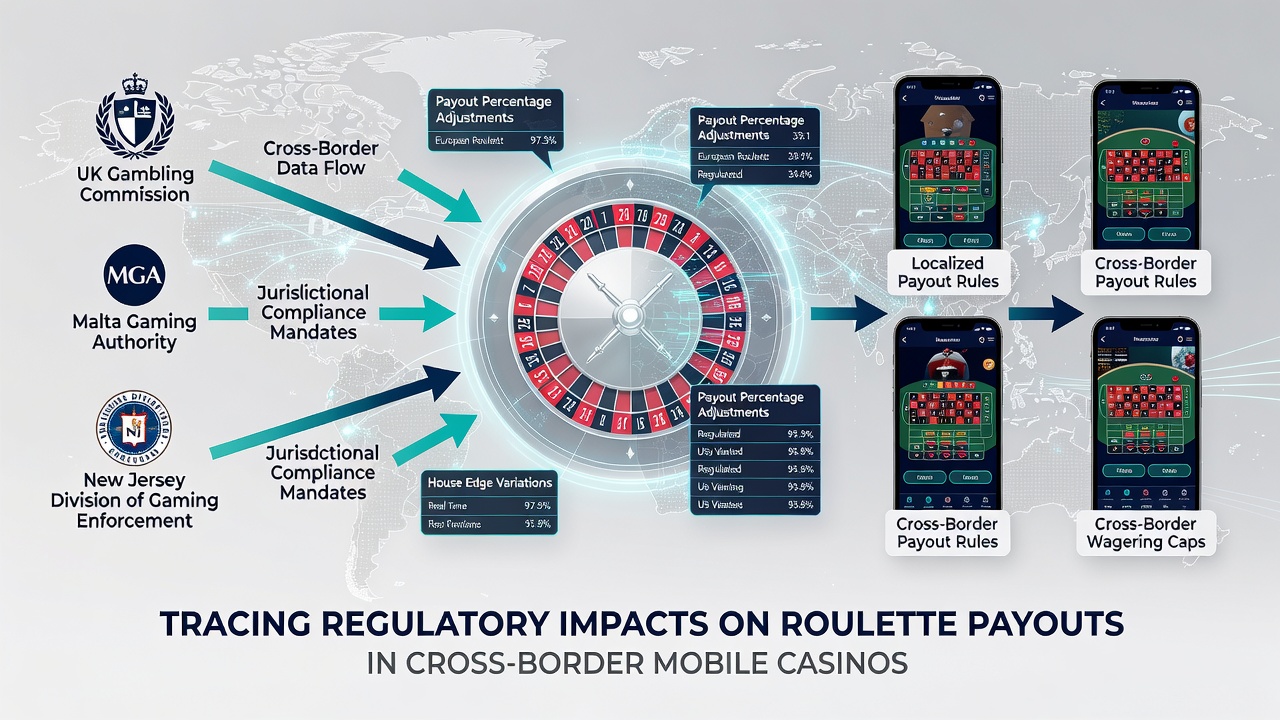
Regulatory bodies across multiple jurisdictions shape how roulette payouts operate in mobile casinos that serve players from different countries, and these rules often intersect in ways that affect return-to-player percentages along with minimum payout thresholds. Jurisdictions such as those overseen by the Malta Gaming Authority establish baseline requirements for game fairness while cross-border operators must reconcile these standards with local mandates from places like the Kahnawake Gaming Commission or the Nevada Gaming Control Board. Data from industry reports indicate that operators adjust roulette configurations to meet the strictest applicable rules in each market they enter, which can result in payout structures that vary even for the same game title depending on user location.Divergent Regulatory Approaches Across Regions
European regulators tend to focus on transparency in random number generation and documented payout ratios, whereas North American frameworks place greater emphasis on licensing conditions that tie directly to house edge limits. Australian authorities through bodies like the Australian Communications and Media Authority require additional reporting on mobile game outcomes, and these obligations extend to roulette variants hosted on cross-border platforms. Observers note that operators frequently maintain separate server configurations or game libraries to satisfy overlapping demands, which means a player accessing the service from one country might encounter different payout tables than someone connecting from another region.
Technical Adjustments in Mobile Environments
Mobile casino platforms must implement geolocation tools and account verification systems that trigger the correct regulatory overlay for each session, and this process influences how roulette payout algorithms are deployed in real time. Research from gaming technology providers shows that software updates often include region-specific modules that alter prize multipliers or betting limits to align with local caps, while still preserving overall game integrity across borders. Those who manage cross-border operations report that maintaining consistent user experiences becomes more complex when regulators in one area demand higher minimum returns than those enforced elsewhere.
Effects on Roulette Payout Structures
Regulations frequently set minimum return-to-player rates for roulette, and these floors can range from 90 percent in certain markets to 95 percent or higher in others, forcing operators to recalibrate wheel configurations or bonus features accordingly. In August 2026, several jurisdictions plan to introduce updated reporting standards for mobile gambling systems that will require more granular disclosure of payout distributions, which could lead to further standardization efforts among international platforms. Evidence from compliance filings reveals that operators sometimes reduce maximum bet sizes in stricter regulatory zones to keep overall house edges within permitted bounds, while players in less restrictive areas retain access to higher-stake options on the same underlying game engine.
Challenges in Cross-Border Compliance
Operators handling traffic from multiple countries must navigate licensing agreements that sometimes conflict on issues such as progressive jackpot contributions or side-bet payout ratios, and these tensions become especially visible in roulette offerings where small rule variations can shift expected returns. According to the Malta Gaming Authority guidelines, mobile platforms require independent testing for all game outcomes, yet similar testing mandates from other regulators may specify different audit frequencies or sample sizes. Companies therefore invest in modular compliance layers that allow rapid reconfiguration of payout parameters without rebuilding entire applications, and this approach helps them avoid penalties while serving diverse user bases.
Industry Responses and Monitoring Practices
Trade associations such as the European Gaming and Betting Association track how regulatory shifts influence game economics across borders, and their aggregated data highlight patterns where roulette payout percentages stabilize at the lowest common denominator required by the most demanding jurisdiction in an operator's portfolio. Mobile developers incorporate real-time monitoring dashboards that flag when a regulatory change in one region would alter payouts for users elsewhere, allowing proactive adjustments before enforcement deadlines arrive. Studies from academic research centers focusing on gambling technology have documented cases where cross-border operators introduced geo-specific roulette variants to maintain compliance without disrupting service continuity for the broader player base.
Conclusion
Regulatory frameworks continue to evolve in ways that directly shape roulette payout mechanics within cross-border mobile casinos, and operators respond through technical segmentation and ongoing compliance monitoring. Data compiled by international gaming bodies demonstrate that these adaptations maintain legal operation across markets while preserving core game functionality. As new standards take effect in periods such as August 2026, further refinements to payout structures are expected to emerge from the need to satisfy multiple overlapping authorities simultaneously.