The Interplay Between Real-Time Video Streaming Quality and Decision-Making Speed in Poker Games Accessed via Wireless Networks
Bianca Ludwig · Oct 11, 2026
The Interplay Between Real-Time Video Streaming Quality and Decision-Making Speed in Poker Games Accessed via Wireless Networks
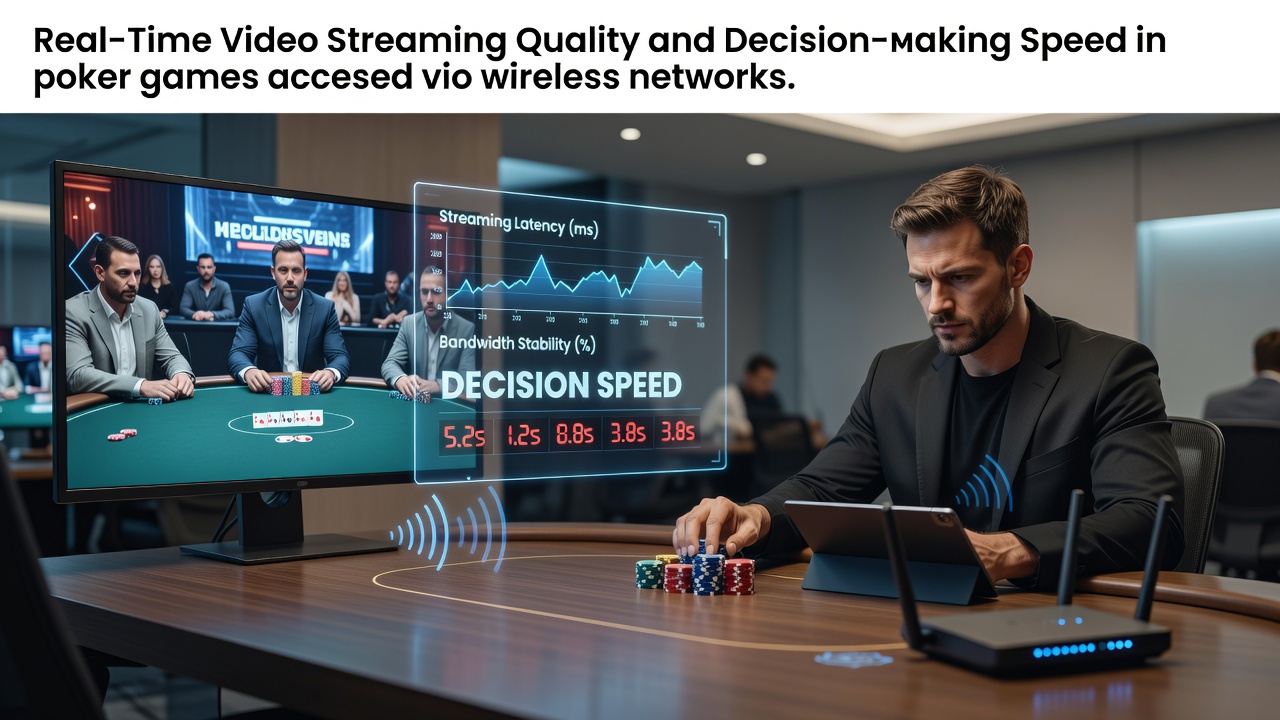
Wireless networks carry live poker streams where video resolution, frame rate, and compression directly shape how quickly participants process visual cues such as opponent gestures, card reveals, and betting patterns, while packet loss or jitter extends the interval between action and response. Researchers have measured these delays in controlled environments and found that even modest increases in latency correlate with slower fold or raise choices during high-stakes hands.
Network Conditions and Streaming Parameters
Modern 5G and Wi-Fi 6 connections deliver the bandwidth needed for 1080p or higher streams, yet variable signal strength across urban and rural cells produces inconsistent throughput that forces adaptive bitrate adjustments mid-hand. Observers note that when bitrate drops, encoders reduce frame rates, and players receive fewer visual updates per second, which lengthens the time required to interpret facial expressions or chip stacks on screen. Data from the Federal Communications Commission indicate that average uplink speeds in many regions reached 50 Mbps by late 2025, yet peak-hour congestion still creates brief spikes in round-trip time that exceed 100 milliseconds.
Effects on Cognitive Processing and Reaction Times
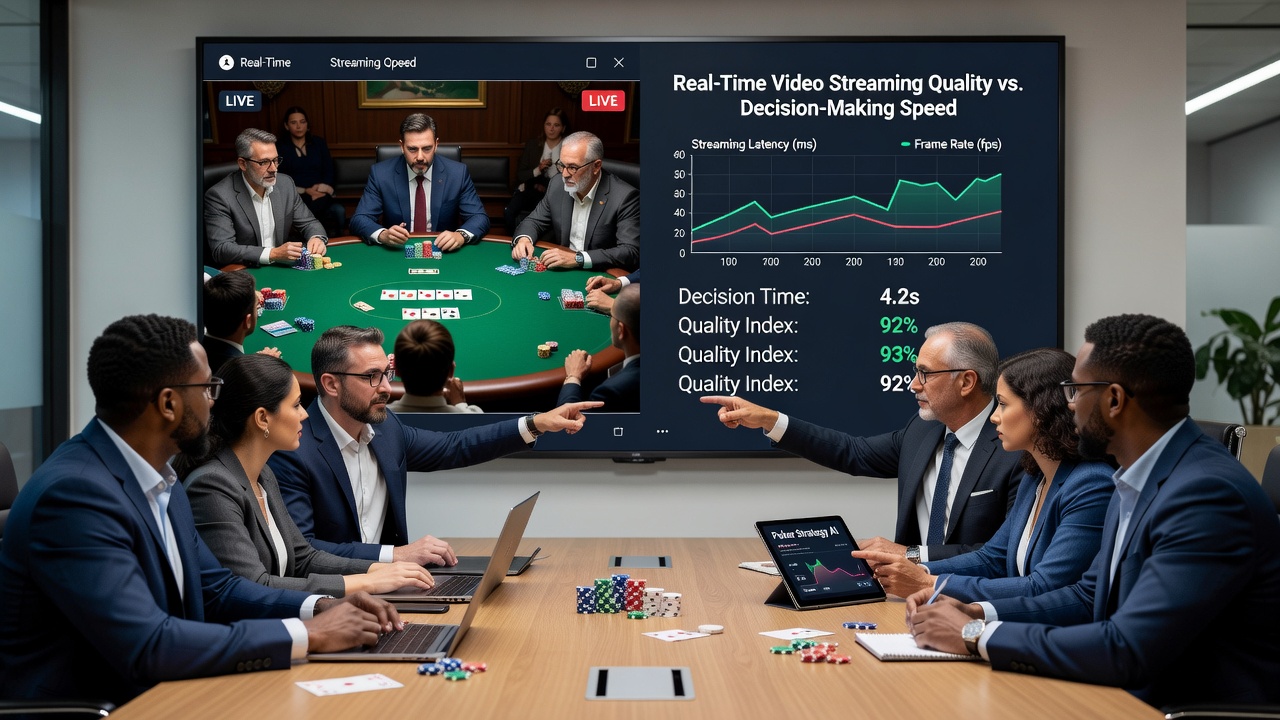
Decision-making speed in poker depends on rapid integration of visual information with memory of prior betting rounds, and streaming artifacts disrupt this sequence because delayed frames arrive after the expected window for action. Studies conducted in university laboratories show that participants facing 150-millisecond video lag required an additional 0.8 seconds on average to select a move compared with those on sub-50-millisecond connections. The extra interval compounds across multiple streets, producing measurable differences in overall session pace and in the frequency of time-bank usage.
Case Examples from Live Platforms
One multi-table tournament operator reported that sessions routed through congested 4G cells experienced a 12 percent rise in player timeouts during October 2026 testing periods, prompting adjustments to server-side buffering that restored frame delivery consistency. Another platform tracked eye-movement data and discovered that viewers on lower-quality streams fixated longer on static background elements rather than on active betting zones, indicating that reduced visual fidelity diverts attention from critical cues.
Technical Mitigation Strategies
Platform engineers address these constraints through forward error correction, predictive frame interpolation, and edge-server placement that shortens the physical distance between the dealer camera and the end-user device. Industry reports compiled by the Wireless Broadband Alliance highlight that networks implementing network slicing for gaming traffic achieved 30 percent lower jitter than best-effort connections during peak evening hours. Such slicing reserves dedicated resources for video packets, allowing the stream to maintain higher frame rates even when general data traffic surges.
Device and Software Variables
Smartphone chipsets differ in decoding efficiency, and older models introduce additional processing delay before frames reach the display buffer. Application developers therefore offer adjustable quality presets that let users trade resolution for reduced latency, and telemetry collected across thousands of sessions reveals that players who select the lowest preset complete decisions 18 percent faster on average than those locked to maximum quality. Operating-system updates released in 2026 further optimized hardware-accelerated decoding pipelines, narrowing the performance gap between flagship and mid-range devices.
Regulatory and Infrastructure Context
Government agencies in multiple regions continue to allocate spectrum that supports lower-latency wireless links, and recent Canadian spectrum auctions specifically designated bands for low-latency applications including interactive gaming. These allocations complement ongoing deployment of small-cell infrastructure that reduces distance-related propagation delay, producing measurable improvements in packet delivery consistency for poker streams.
Conclusion
Streaming quality and decision-making speed remain tightly coupled because every frame dropped or delayed alters the information available to players at the moment of choice. Continued refinement of wireless infrastructure, encoder algorithms, and device capabilities continues to shrink these intervals, yet the relationship between network performance and poker tempo persists as a measurable factor in live wireless play.