Shifts in Engagement Levels During Live Dealer Transitions Across Device Types
Xander Butler · Aug 30, 2026
Shifts in Engagement Levels During Live Dealer Transitions Across Device Types
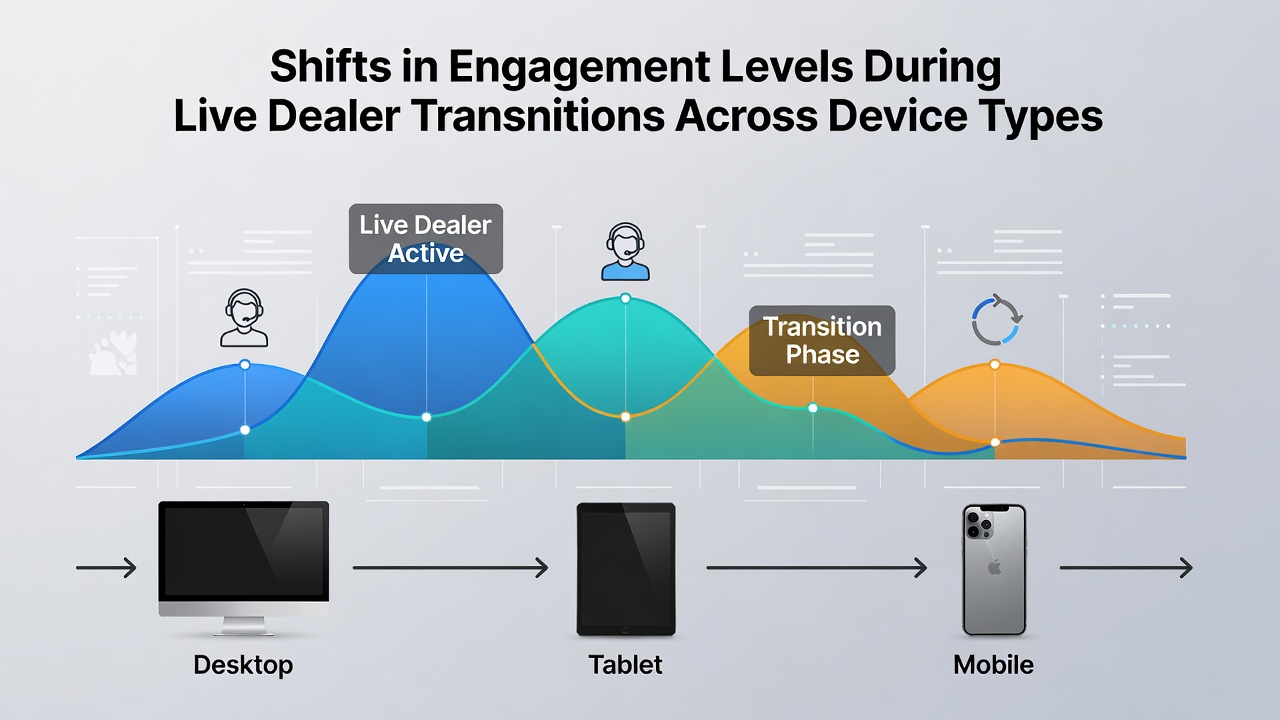
Engagement patterns in live dealer environments shift measurably when players move between mobile phones, tablets, and desktop computers, according to aggregated data from multiple gaming operators and device analytics platforms. Session duration, interaction frequency, and retention rates all register distinct changes during these transitions, with mobile-to-desktop handoffs often producing the most pronounced adjustments in player behavior.
Researchers tracking live dealer platforms note that mobile sessions typically begin with shorter initial engagement windows, averaging 12 to 18 minutes before a device switch occurs. Once players transition to desktop setups, average session lengths extend by 25 to 35 percent, while interaction rates with chat functions and betting controls increase noticeably. Tablet use sits between these extremes, delivering moderate stability during cross-device movement.
Device-Specific Engagement Patterns
Studies compiled through 2025 and into August 2026 reveal that mobile-first players exhibit higher bounce rates immediately after switching devices, yet those who complete the transition show elevated repeat-visit frequency on the new platform. Desktop environments support more complex betting sequences and multi-table viewing, which correlates with sustained attention once the switch completes. Tablets, meanwhile, maintain consistent engagement across portrait and landscape orientations, though fewer players initiate live dealer sessions on these devices compared with phones or computers.
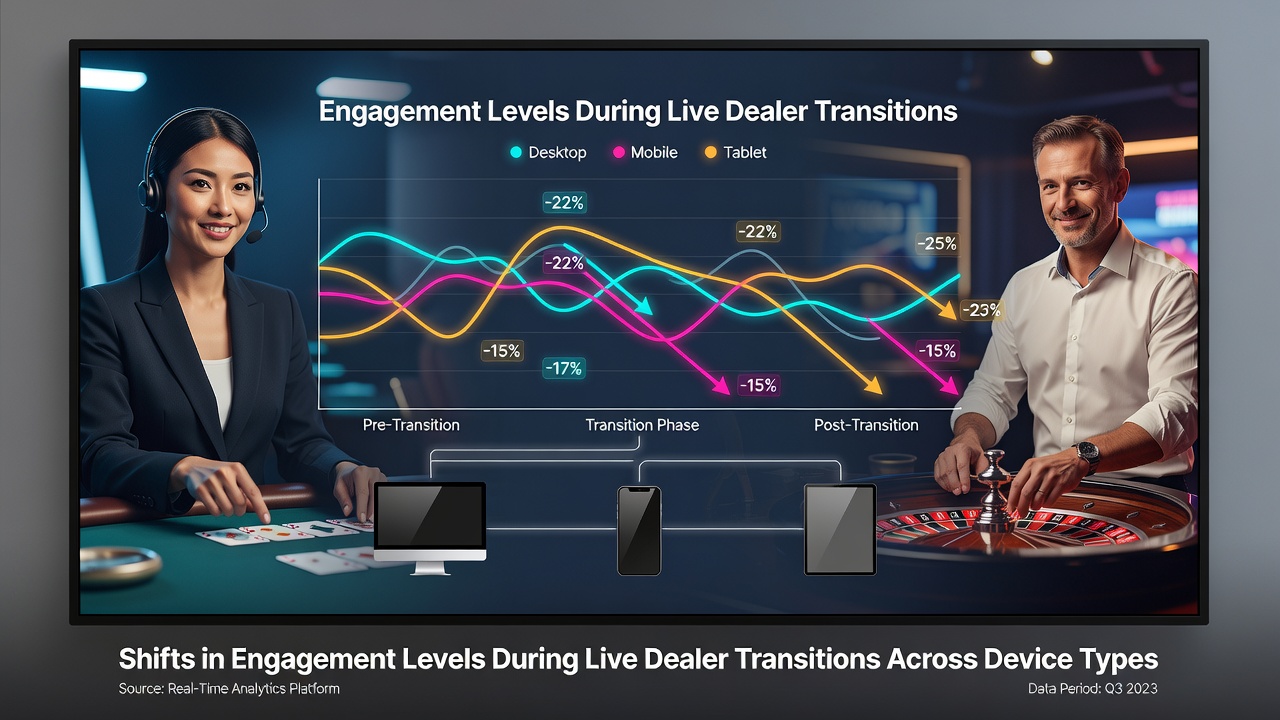
Data from operator dashboards indicate that engagement drops of 15 to 22 percent occur during the first 90 seconds after a mobile-to-desktop transition, followed by recovery and growth beyond original levels. Desktop-to-mobile shifts produce smaller initial dips but rarely exceed the engagement heights reached on larger screens. These patterns hold across multiple game types, including roulette, blackjack, and baccarat variants streamed in real time.
Transition Triggers and Timing
Observers monitoring player behavior in August 2026 report that device changes frequently coincide with specific events such as game round completions, bonus activations, or connectivity interruptions. Players who switch during natural pauses in gameplay demonstrate faster recovery of engagement metrics than those who transition mid-hand. Technical factors including screen resolution, input method, and network stability further influence how quickly engagement rebounds after each move.
One analysis of cross-device logs showed that players using 5G connections experienced shorter engagement dips during transitions than those on Wi-Fi or older mobile networks. The same dataset revealed that sessions begun on phones and completed on desktops generated the highest average wager amounts per minute once the new interface stabilized.
Regional Data Variations
Reports from the Alcohol and Gaming Commission of Ontario document similar transition effects within Canadian markets, where mobile-to-tablet switches produced steadier engagement curves than phone-to-desktop moves. In contrast, figures released by the Australian Communications and Media Authority highlight stronger desktop retention following initial mobile play, particularly among users aged 25 to 44. These regional differences align with variations in average screen sizes, data plan structures, and preferred game formats across jurisdictions.
Academic reviews of device telemetry further confirm that engagement metrics stabilize within four to seven minutes after most transitions, provided the destination device maintains adequate processing power and display clarity. Slower stabilization occurs on older hardware or when players encounter interface resizing issues during the switch.
Conclusion
Device transitions during live dealer sessions produce measurable, recurring shifts in engagement that operators track through session analytics and behavioral logs. Mobile, tablet, and desktop environments each impose distinct patterns on session length, interaction depth, and post-transition retention, with timing and technical conditions modulating the scale of those changes. Continued monitoring through 2026 and beyond will clarify whether emerging device categories or improved cross-platform synchronization alter these established dynamics.